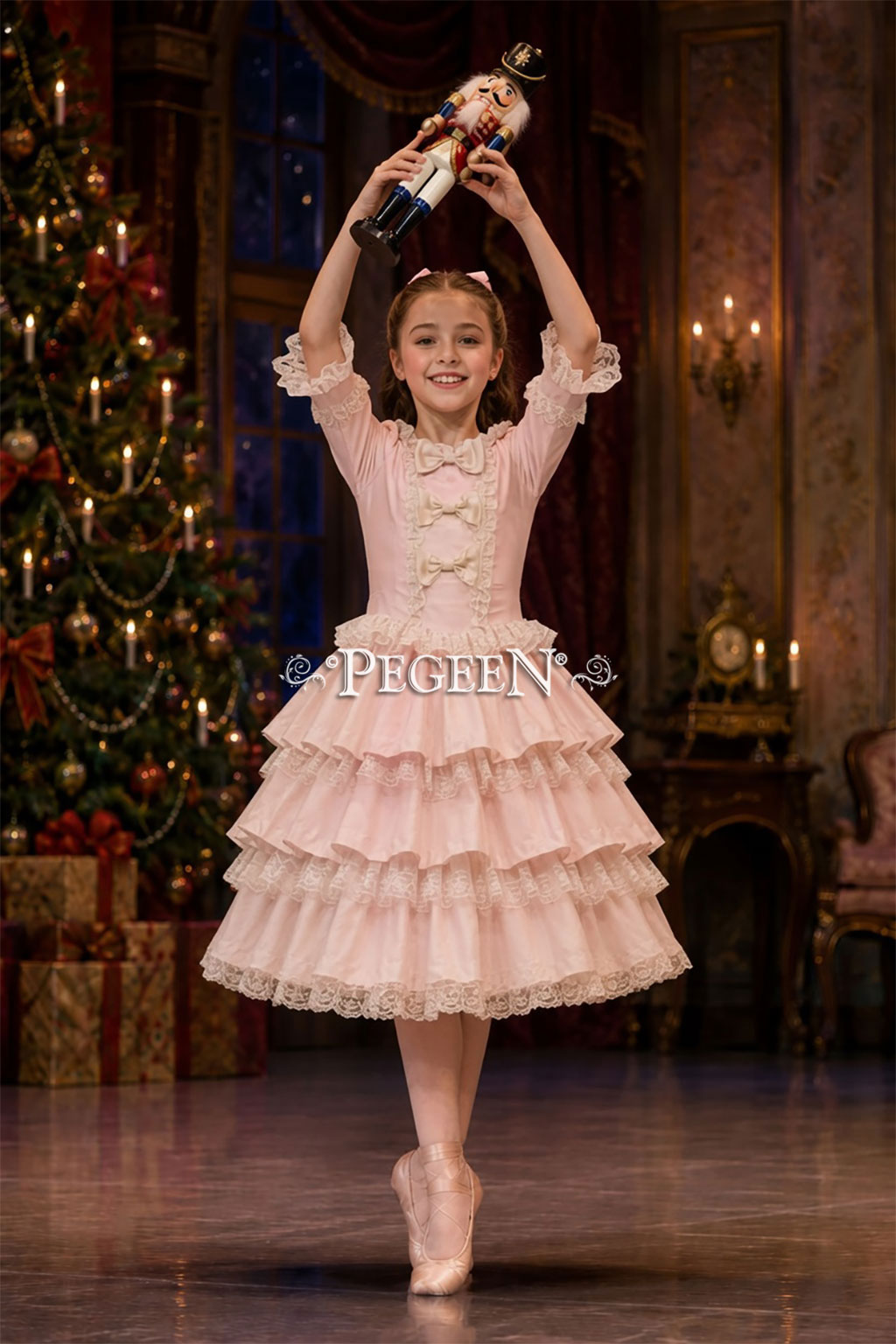
Choosing her Clara Dress for The Nutcracker Ballet
I have designed a lot of Nutcracker dresses over the years, and Clara is always one of the interesting ones.
You would think choosing a Clara dress would be easy. Pretty dress. Christmas. Done.
Not exactly.
Clara has to look special enough that the audience immediately understands that she is important, but she is also part of the Party Scene. Her dress has to work with the rest of the production, work with the choreography, look good under stage lighting and — maybe most importantly — still look like a young girl’s dress.

We get asked all the time what a Clara dress is supposed to look like.
The answer is: there really isn’t just one Clara.
And frankly, I think that is what makes designing her so much fun.
Start With Your Production — Not the Dress
This is probably the first thing I ask a ballet company.
What does your Nutcracker look like?
Some productions are very traditional. Others are bright and fanciful. Some use Victorian colors, some want Christmas red and green, some use pastels, and others build the entire Party Scene around jewel tones.
Clara shouldn't look like she accidentally walked in from a different Nutcracker.
Before choosing her color, I like to know what the Party Scene children are wearing, what the scenery looks like and, if possible, what colors are around Clara during the scenes where she is most visible.
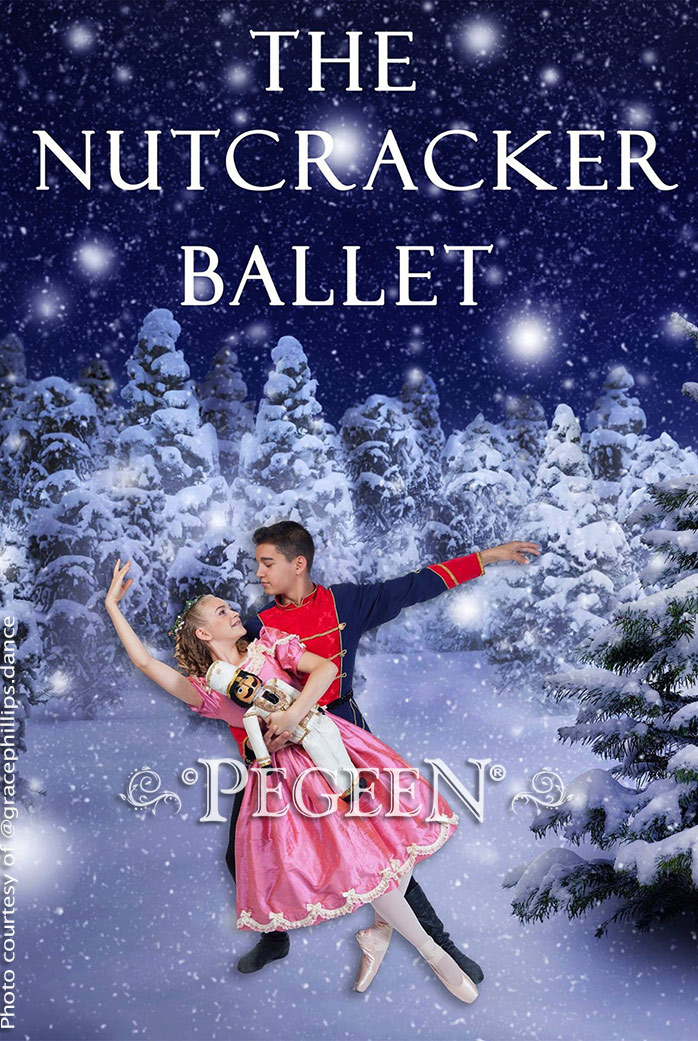
We have made Clara dresses in white and ivory, of course, but also blues, pinks, burgundies, greens and combinations that might surprise you.
There isn't a rule saying Clara has to be wearing white.
There IS a rule in my mind that she should look like she belongs in your production.
How Long Should a Clara Dress Be?
This is another question that comes up constantly.
I generally like a Clara dress below the knee rather than much lower than midcalf.
There are practical reasons for that — Clara has to move in this dress — but visually I also think it keeps her looking like a child.
A beautiful dress does not have to be a miniature adult ball gown.
And remember that you are looking at the dress from the audience. A detail that looks wonderful from three feet away in the costume room may completely disappear on stage.
That affects everything from length to trim to sash width.
Before we make a Clara dress, I always want to know what the dancer actually has to DO in it. Your choreographer should have the final word on anything that affects movement.
Silk Looks Very Different Under Stage Lights
Pegeen uses silk dupioni for many of our Nutcracker dresses, and there is a reason I love it for stage costumes.
It has texture.
It has body.
And it has enough of a slight sheen to catch the light without looking like a shiny costume fabric.
That last part matters to me.
I don't particularly like Clara looking as though she is wearing a Halloween costume. I want the dress to look like a real dress — just one beautiful enough to be seen from the back of the theater.
Silk also gives us an enormous range of color choices. We work with more than 260 silk colors, so we can get far more specific than simply saying “blue” or “pink.”
There is blue.
And then there is pale blue, French blue, sapphire, dusty blue, navy...
You get the idea.
When a ballet company sends us a photograph of its backdrop, Party Scene costumes or even a paint color, that gives us something real to design around.

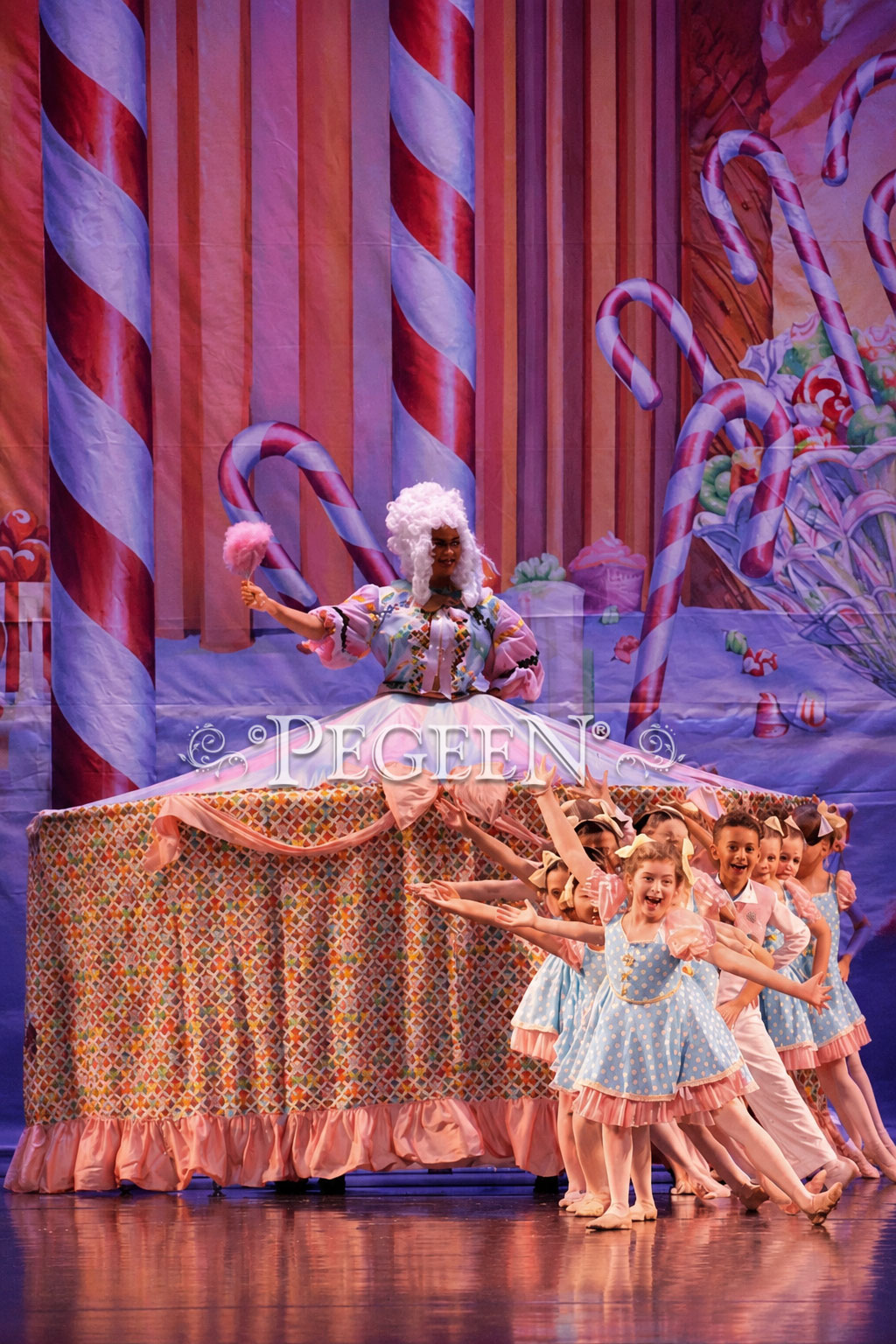
Should Clara Match the Party Scene Children?
She can.
But she doesn't have to.
Sometimes the prettiest solution is to use the same general color story and make Clara just a little different.
Maybe she has the same sash color.
Maybe her skirt is a lighter version of the Party Scene girls' dresses.
Maybe everyone is in jewel tones and Clara is in ivory with a deep burgundy sash.
The objective isn't necessarily MATCHING.
It is coordinating.
There is a difference.
When the Party Scene comes together visually, Clara can stand out without looking out of place.
That is usually what I am after.
Don't Forget Who Is Wearing It
This sounds obvious, but it really isn't.
Clara might be danced by a very young dancer in one production and an older dancer in another.
We design accordingly.
I don't want to take a dress intended for a six- or eight-year-old and simply make it larger for a teenager. Proportions change. Sleeve lengths change. Bodices change. The fullness of the skirt may change.
The dress still has to look right on the actual dancer.
This is one of the reasons we ask so many questions before we make a custom Nutcracker costume.
Height matters.
Measurements matter.
The dancer's age matters.
The choreography matters.
And the look the artistic director is trying to create matters.
Think About the Back of the Dress, Too
I probably say this more often than most costume companies do.
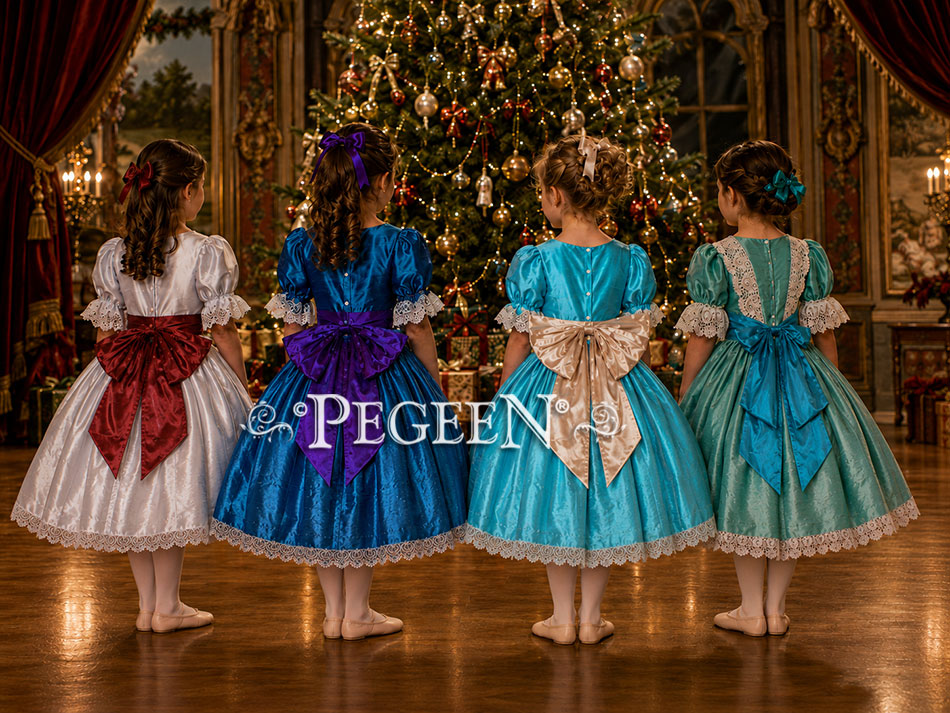
Your audience sees the BACK of the costume.
A lot.
Clara turns. She dances. She walks away from the audience. She interacts with other performers.
So I don't think the back should be an afterthought.
We frequently use adjustable hooks and eyes, sashes and bows as part of the design. A bow can be beautiful from the audience if it is proportioned correctly — but enormous floppy bows aren't automatically better.
I want the back of the dress to look intentional.
You are designing a three-dimensional costume, not a photograph.
White Isn't Always the Answer
I mentioned this earlier, but it deserves its own section because people often begin with:
“Clara wears white, right?”
She certainly can.
A white or ivory Clara dress can be beautiful, particularly against darker scenery.
But before automatically choosing white, look at the stage.
What color is the floor?
What color is the backdrop?
What are the other children wearing?
What happens to white when the lighting changes?
Sometimes a soft blue, pale pink, champagne or even a stronger color gives Clara much more presence on stage.
We have had companies choose colors I never would have thought of without seeing the rest of their production — and once you see everything together, it makes complete sense.
That is the fun of custom design.

My Best Advice? Send Us Pictures.
If you are trying to decide what Clara should wear, don't feel as though you have to figure it all out before you contact us.
Send us what you have.
Send a picture of your stage.
Send the Party Scene costumes.
Send Clara from last year.
Send the backdrop.
Send the Nutcracker.
Send us the photograph you found somewhere and say, “I like the sleeves on this one but not the skirt.”
That actually helps.
Designing a custom Clara dress is much easier when we understand the whole picture.
After doing this for as long as I have, I have learned that the prettiest Clara dress isn't necessarily the prettiest dress sitting by itself on a mannequin.
It is the dress that looks right when Clara walks onto your stage.
That is the one we are trying to make.